Hello 3rd Grade, Back to School: Choosing the Right Digital File for Your Projects
Preparing for a new school year often means personalizing everything from t-shirts to water bottles. For many parents, teachers, and crafters, the "Hello 3rd Grade, Back to School" digital file offers a convenient way to create custom gear. This particular product is a zip file containing multiple formats, including SVG, DXF, EPS, PNG, and JPEG. Understanding what each format does and how this set compares to other options can help you decide whether it fits your needs or if a different approach would serve you better.
What the Hello 3rd Grade File Actually Includes
The zip file contains five separate files, each designed for a specific type of software or use case. The SVG file works with cutting machines like Cricut Explore and Silhouette Designer Edition, as well as design programs such as Adobe Suite, Inkscape, and Corel Draw. The DXF file is included for Silhouette users who rely on the free version of Silhouette Studio. An EPS file supports vector editing in programs like Adobe Illustrator and Inkscape. Finally, a PNG with a transparent background and a high-resolution JPEG, both at 300 dpi, round out the set for print-based projects.
Having multiple formats in a single download means you likely won't need to convert or search for additional files. If you are using a Cricut machine, the SVG path is straightforward. If you prefer to work in Photoshop or simply print the design on paper, the PNG and JPEG give you ready-to-use options. This all-in-one approach reduces friction, especially for those who split their work between cutting machines and standard printers.
How This File Compares to Other Back-to-School Design Options
Digital design files for school-themed projects generally fall into a few categories. Pre-designed SVG bundles like Hello 3rd Grade represent one end of the spectrum: ready-made, style-specific artwork that you can download and use immediately. On the other end, you have design-your-own solutions, such as creating text in Cricut Design Space or Silhouette Studio using built-in fonts and shapes. Somewhere in the middle, there are editable templates that allow you to change colors or add names but still rely on a prebuilt layout.
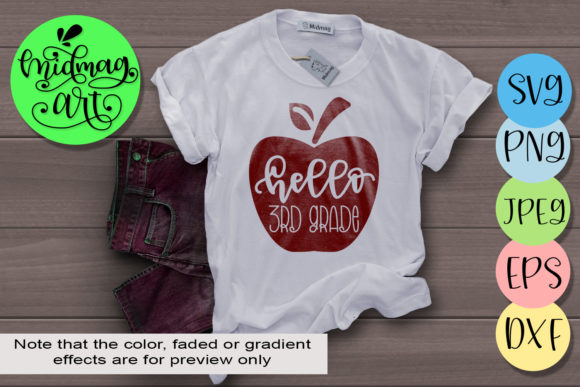
The Hello 3rd Grade file sits firmly in the ready-made category. Its strength is that you do not need to spend time arranging letters or adjusting spacing. The design is complete, and you can load it directly into your software. This saves time, especially if you are making multiple items for a classroom or individual students. Compared to building a design from scratch using generic fonts and clip art, this option delivers a polished look with minimal effort.
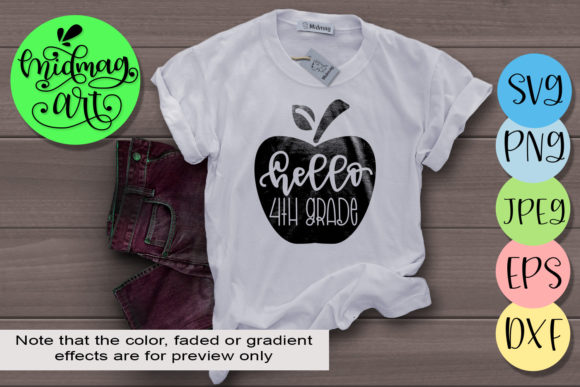
However, if you want to customize the text beyond the provided "Hello 3rd Grade" wording, a ready-made SVG may not be the best fit. Some SVG files allow text editing if they were created with live text, but many are converted to outlines, meaning you cannot easily change the phrase to "Hello 4th Grade" or add a student's name. If personalization beyond the included design is important, you might need a layered SVG with separate editable text elements or a fully editable template.
Format-by-Format Breakdown and Practical Use Cases
Not every format in the zip file will be relevant to every project. Understanding when to use each one can save you frustration and wasted material.
SVG for Cutting Machines and Vector Software
The SVG file is the primary format for most cutting machine users. If you own a Cricut Explore, Cricut Maker, or Silhouette Cameo with the Designer Edition, you can import this file directly. The SVG retains clean vector paths, which means your machine will cut precisely along the design lines. This format is also useful if you want to scale the design without losing quality. For example, a small decal for a pencil case and a large iron-on for a tote bag both benefit from the same SVG file, scaled appropriately.
DXF for Free Silhouette Users
The DXF file is a practical inclusion for Silhouette users who do not have the paid Designer Edition. The free version of Silhouette Studio does not support SVG imports, but it does accept DXF. This means you can still use the design without upgrading your software. It is worth noting that DXF files can sometimes have quirks with layer handling or object grouping, but in most cases, they work reliably for basic cutting.
EPS for Professional Design Work
An EPS file is less commonly needed by home crafters but is valuable if you work in Adobe Illustrator or similar vector applications. The EPS format preserves the design's vector integrity and is often easier to manipulate in professional software. If you plan to combine this design with other vector elements or adjust individual points, the EPS file gives you that flexibility.
PNG and JPEG for Print-Based Projects
The PNG file with a transparent background is ideal for print-and-cut projects or for placing the design over a background. You can insert it into a design for a mug, a card, or a poster without worrying about a white box around the artwork. The JPEG, also at 300 dpi, works well for full-color printing on paper or fabric where a transparent background is not required. Both raster files are best used at their original size or slightly smaller. Enlarging them too much can introduce pixelation, whereas the vector formats can scale indefinitely.
Strengths and Tradeoffs of This Digital Bundle
One clear strength of the Hello 3rd Grade set is the convenience of receiving five formats in one download. You do not need to track down separate SVG, DXF, and PNG files or perform conversions that could compromise quality. The design itself is typical of school-themed cut files: bold lettering, a playful tone, and simple visual appeal that works well on apparel and accessories.
Another advantage is the 300 dpi resolution on the raster files. Many free designs come at lower resolutions, which look fine on screen but muddy when printed. At 300 dpi, the JPEG and PNG are suitable for high-quality prints, whether you are using an inkjet printer at home or uploading to a print-on-demand service.
On the tradeoff side, the design is fixed. If you want "Hello 3rd Grade" in a different font, with different colors, or with a student's name, you would need to alter the vector files manually. Users without vector editing experience may find this difficult. Additionally, the set does not include a layered SVG with separate cut paths for different colors. Some advanced users prefer files where each color is on a separate layer, making it easier to cut vinyl in multiple colors. This file appears to be a single-layer design, so you would need to create a shadow layer or use a single color for the entire design or print and cut it.
Another limitation is that the file is designed for third grade specifically. If you are making items for multiple grades or future years, you would need a separate file for each grade level. Some crafters prefer a "First Day of School" design with a blank space for writing in the grade each year. That approach offers more longevity but requires more setup each time.
When This File Is a Good Fit
This digital bundle works best for someone who needs a quick, attractive design for third-grade-related projects. If you are a parent making a first-day shirt for your child, a teacher creating matching gear for the class, or a small shop fulfilling orders for back-to-school items, having a ready-made SVG saves time. The multiple formats also mean you are unlikely to hit compatibility issues.
It is also a solid choice if you are new to using digital files for crafting. The inclusion of both cutting and print formats gives you room to experiment. You can try a simple print on cardstock using the JPEG, then move to cutting vinyl using the SVG as you grow more comfortable with your machine.
When You Might Consider a Different Option
If you need to customize text, names, or the specific wording, a product that offers editable text separated as live text or a template with editable fields would be more suitable. Some SVG designers sell sets where the text layer remains editable in certain software, giving you more flexibility. Alternatively, you could use a font-based design in Cricut Design Space or Silhouette Studio to type exactly what you want, but that requires more design work on your end.
Another scenario where you might look elsewhere is if you need a highly detailed or layered design with multiple colors. Single-layer SVGs work fine for simple projects, but if you want a complex rainbow effect with individually cut color pieces, you would need a file with separate layers for each color. Similarly, if you frequently make items for different grade levels, buying a bundle that includes multiple grades or a reusable design with a blank space might be more economical in the long run.
Finally, if you only need a single format, say just a JPEG for printing on a card, this five-format bundle may offer more than you need. Smaller, single-format purchases can sometimes be cheaper. However, the convenience of having everything in one zip file often justifies the cost for those who value time over money.
Making a Decision That Fits Your Workflow
Choosing the right digital file for back-to-school projects comes down to matching the file's capabilities with your workflow. Consider what machine or software you use most. If you primarily use a Cricut and always work in SVG, then the SVG in this set meets your core need. If you sometimes print at home and sometimes cut vinyl, the PNG and DXF give you flexibility across different sessions.
Also think about how many items you plan to make and for whom. A single third-grade design is ideal for one classroom or one child. If you are creating for multiple children in different grades or for seasonal events beyond back-to-school, a more comprehensive bundle might serve you better. That said, the simplicity of a ready-to-use design can be a relief when you are under time pressure during the busy back-to-school season.
Quality wise, the 300 dpi raster files and the standard SVG vector format meet professional benchmarks for home crafting and small-scale production. You can confidently use this file for items you intend to sell, as the resolution and format compatibility are solid.
Practical Examples of Use
Imagine you are preparing welcome gifts for your child's third-grade class. You could use the SVG to cut iron-on vinyl for 20 pencil cases. The single design scales evenly, and you can cut multiple copies in one go using your machine's repeat feature. The DXF file could serve as a backup if you need to open it on a friend's Silhouette without the upgraded software. Meanwhile, the PNG could be used to print small labels for notebooks, placing the design on white or transparent sticker paper.
For a teacher creating a bulletin board, the JPEG could be printed in poster size using a school printer, providing an instant header for a "Hello 3rd Grade" display. The EPS file allows the school's IT specialist or a parent volunteer to adjust the color in Illustrator to match the school colors, while still maintaining crisp edges for large-scale printing.
These examples illustrate how having multiple formats in one download can streamline a variety of tasks without requiring additional purchases or conversions.
Final Considerations
The Hello 3rd Grade, Back to School digital file offers a practical and time-saving solution for anyone looking to create third-grade-themed projects. Its format variety supports both cutting and printing workflows, making it suitable for Cricut, Silhouette, and standard print use. While it does not offer editable text or multiple color layers, its all-in-one convenience and high resolution make it a reliable choice for straightforward projects.
When evaluating this against other resources, think about how much customization you need, how many grades you need to cover, and whether you prefer to work from a ready-made design or build your own. For the specific goal of producing a clean, grade-specific design quickly, this file holds its own. For more complex or open-ended needs, exploring editable templates or layered SVGs may be worth your time. Understanding these tradeoffs helps you choose the tool that best matches your project, your machine, and your level of experience.