Unlocking Creative Possibilities with Plaid Digital Papers
Digital design thrives on texture, pattern, and color—elements that instantly transform a flat layout into something tactile and inviting. Among the most enduring and adaptable patterns, plaid stands out. Its intersecting lines and balanced grids carry a sense of tradition, yet when rendered as high-resolution digital files, they become surprisingly modern tools. Plaid Digital Papers offer a seamless way to bring that timeless pattern into contemporary projects, from classroom materials to commercial branding.
Whether you are a professional graphic designer, a small business owner crafting social media assets, a teacher preparing bulletin boards, or a hobbyist scrapbooker, a well-curated set of plaid backgrounds can save hours of design time while providing a cohesive visual language. The collection of 28 Plaid digital papers discussed here exemplifies how a single pattern family can serve dozens of distinct purposes—if you understand its capabilities and limitations.
Why Plaid Patterns Endure in Digital Design
Plaid is not merely a pattern; it is a system of visual hierarchy. The interplay of vertical and horizontal bands at varying weights creates a natural focal point. Unlike a solid color or a random texture, plaid directs the eye along its lines, giving structure to any composition. In digital papers, this structure becomes a foundation that can support text, images, or other design elements without overwhelming them.
From a psychological perspective, plaid evokes warmth, stability, and nostalgia. It is equally at home in a rustic farmhouse aesthetic and a polished corporate presentation. When used as a background, it adds depth without clutter. For instance, a Multicolor Digital Paper 12 x 12 with a subtle red-and-blue tartan can anchor a holiday greeting card, while a muted gray plaid can serve as a professional email newsletter header.
Digital designers increasingly turn to patterned backgrounds because they solve a common problem: how to make a layout feel finished without requiring custom illustration. Plaid sets, especially those with 28 distinct variations, provide a library of options that can be mixed, matched, and layered to create unique composites.
The Practical Advantages of a 28-Paper Collection
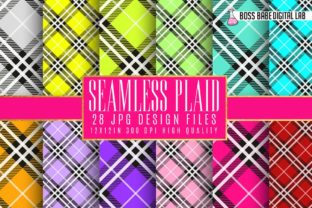
A single plaid pattern may feel limiting, but a collection of 28 Plaid digital papers opens a spectrum of color combinations, stripe widths, and overall moods. Having this many options in one download means you can maintain visual consistency across a multipage project—such as a planner, a presentation deck, or a wedding package—while introducing subtle variation from page to page.
Consider a teacher preparing a “Back to School” bundle. One page might use a bright yellow-and-green plaid for the welcome letter, another a navy-and-white pattern for the schedule, and a third a warm orange plaid for the supply list. The common thread (literally the plaid structure) ties the materials together, while the color shifts differentiate content. This is where Back to School paper collections shine: they are pre-themed yet flexible enough to adapt to different grade levels and subjects.
For commercial users, the value multiplies. With Plaid commercial use licensing, you can incorporate these papers into products for sale—digital scrapbooking kits, printable wall art, gift wrap designs, or even fabric-like textures for mockups. The variety ensures that your product line does not look repetitive. Instead, you can offer a cohesive series of items built around a plaid core.
Technical Specifications That Matter
Not all digital papers are created equal. The difference often lies in resolution, file format, and dimensions. The set described here comes as 300 dpi High Quality JPG files, each sized at 12 x 12 inches. This is the standard for professional scrapbooking and print-on-demand products. At 300 dpi, a 12x12 image is 3600 pixels per side, which allows for crisp printing up to that size—and even larger if you are willing to accept a slight interpolation.
Why JPG rather than PNG? JPG files offer excellent compression for photographic-style content, and plaid patterns, with their many color transitions, compress efficiently without visible artifacts at quality level 10 or above. PNG files preserve transparency, but for a full-bleed background pattern, JPG is often more practical because it yields smaller file sizes while maintaining high visual fidelity. However, some designers prefer PNG for layering purposes. If you need transparency, you can convert the JPG to PNG in editing software, but the instant download convenience of ready-to-use JPGs means you can start working immediately.
The Instant Download delivery model eliminates shipping delays and packaging waste. After purchase, you can access the files anywhere—useful for last-minute projects or when working with remote collaborators. For creators on tight deadlines, this immediacy is a significant advantage.
Creative Workflows: Integrating Plaid Digital Papers
To make the most of Digital Paper collections, consider these practical workflows across different use cases:
For Scrapbookers and Memory Keepers
Print the 12x12 papers at home or through a local print shop. Use them as background layers behind photos. Because plaid has inherent structure, it can guide the placement of embellishments. A busy multicolor plaid might serve as a mat, while a subtle tone-on-tone plaid works as a full-page background. Tip: Create a “paper stack” by layering two or three different plaid pages with contrasting scales (large grid over small grid) to add dimensional interest.
For Graphic Designers and Brand Managers
Use plaid textures in digital mockups for packaging, labels, or stationary. A Plaid background can be applied as a fill layer in design software and adjusted with blending modes—multiply for a darker effect, overlay for a textured wash. Because the papers are 300 dpi, they maintain sharpness when scaled down for social media graphics or web banners. For a brand that wants to evoke heritage or craftsmanship, plaid backgrounds can become a signature element across email templates, website hero images, and presentation templates.
For Educators and School Administrators
The Back to School paper subset within a plaid collection is ideal for creating welcome packets, classroom signs, and event flyers. Print on office paper or cardstock. The 12x12 size also fits standard scrapbook albums, but it can be trimmed to 8.5x11 with minimal waste. Use a plaid border by placing the paper behind a white box with a thin margin. This gives a polished, uniform look to homework assignments or permission slips.
For Hobbyists and DIY Enthusiasts
Download the files and use them as digital wrapping paper for e-gifts, as backgrounds for digital planners, or as printable origami paper. The variety of colors—from muted earth tones to vibrant rainbow palettes—ensures you always have a pattern that matches the season or mood. Because the files are high-resolution, you can also use them as decoupage material for 3D crafts like pencil holders or tray liners.
Commercial Use Considerations and Licensing
When sourcing Plaid commercial use digital papers, always verify the terms. The set in question is sold with a commercial license, which typically allows you to use the designs in products you sell, such as printed goods, digital downloads, or craft items. There may be restrictions on reselling the digital files themselves as standalone patterns (that would be redistribution). But using them as part of a larger creation is usually permitted.
This is crucial for sellers on platforms like Etsy, Teachers Pay Teachers, or Creative Market. A single plaid paper pack can become the basis for dozens of printable products: planner stickers, note cards, party decorations, and more. Because the collection includes 28 unique patterns, you can create a full product line that feels coherent without relying on a single repetitive background. The Multicolor Digital Paper 12 x 12 format also means you can offer both digital and physical versions of your products (e.g., a printable wall art set vs. a printed notebook cover).
Quality Assurance: Why 300 dpi and JPG Matter
Resolution directly impacts perceived value. Digital papers at 72 dpi might look fine on screen but become pixelated when printed. The 300 dpi High Quality JPG files guarantee that the plaid lines remain sharp and the color transitions smooth, even when printed at full size. Moreover, the 12x12 dimension is a standard in the papercraft industry, so it fits existing templates and cutting machines (like Cricut or Silhouette) without resizing.
One nuance worth noting: plaid patterns with narrow stripes can suffer from moiré effects when printed on certain textures or screened in digital displays. At 300 dpi, this risk is minimized because the dots per inch exceed the typical halftone frequency of most printers. If you plan to use the papers as web backgrounds, you can safely resize them to 1920x1080 pixels while maintaining acceptable quality, or use the original 3600-pixel version for retina displays.
Exploring Color Psychology Through Plaid Variations
The 28-paper collection essentially offers a toolkit for emotional communication. Plaid patterns with primary colors (red, blue, yellow) convey energy and playfulness—ideal for children’s materials or sports-themed events. Pastel plaid sets (pink, lavender, mint) evoke softness and romance, suitable for weddings or baby showers. Earth-toned plaids (brown, olive, rust) create an organic, cozy feel that works for autumn branding or natural product packaging.
By having access to 28 distinct combinations, you can select a palette that aligns with your project’s psychology without having to hunt through multiple separate purchases. This is especially valuable for Plaid Digital Papers when used in a series: a three-part training manual could use warm tones for the introductory module, cool tones for technical sections, and neutral tones for the conclusion. The plaid structure keeps everything visually linked.
Workflow Tips for Immediate Use
After your Instant Download completes, organize the files into named folders by color family or stripe density. Rename files for quick access (e.g., “RedTartan_LargeGrid.jpg”). When importing into design software, consider creating a preloaded swatch library of plaid patterns so you can apply them with one click. For print projects, test a small section first to confirm ink saturation, especially for darker plaids that may use heavy coverage.
If you are layering multiple papers, save your master file in a lossless format (TIFF or Photoshop PSD) to avoid generational loss from repeated JPG compression. Export the final product as a high-quality JPG or PNG depending on the use. For digital-only projects, you can reduce the resolution to 150 dpi to speed up loading on websites, but always keep the original 300 dpi files for archival purposes.
Adapting Plaid Backgrounds Across Media
The same plaid paper that works as a printed scrapbook background can also be used as a video call background, a Zoom virtual backdrop, or a social media story frame. Because plaid is a repeating pattern, it tiles seamlessly in software like Canva or PowerPoint. Simply upload one 12x12 file and set it as a background image—the seamless edges ensure it repeats without visible lines.
For web design, plaid backgrounds can be used as section dividers. A full-width plaid strip between content blocks adds texture without distracting from text. Because the patterns are high-contrast, ensure adequate text legibility by applying a semi-transparent overlay or using a solid text box within the section.
Teachers especially appreciate the print-and-use nature of these papers. A Plaid background instantly elevates a classroom newsletter from a plain word document to a professional-looking communication. By using different plaids for different months or subjects, you create a visual calendar that students and parents quickly recognize.
Observations on Long-Term Value
Investing in a comprehensive set of 28 Plaid digital papers is not just about the immediate project. These files become a resource you can revisit for years. As design trends shift, plaid remains a staple because it adapts: pair it with modern sans-serif fonts for a contemporary feel, or with ornate serifs for a classic look. The same paper can serve completely different aesthetics depending on the accompanying elements.
Moreover, because these are digital files, they do not degrade over time. You can print them on different materials (matte paper, glossy photo paper, fabric sheets) and achieve varied tactile results. The 12x12 dimension also fits perfectly into standard scrapbook albums, but you can scale them down to 6x6 or 4x6 for smaller projects without losing quality, as long as you maintain 300 dpi output.
From a cost perspective, a single set that covers 28 distinct designs is far more economical than buying individual papers per project. The Digital Paper format also saves physical storage space—you can archive thousands of patterns on a portable drive or cloud service. For designers who run multiple client accounts, having a go-to plaid collection streamlines approvals because the client sees a consistent, coherent offering.
Ultimately, the real value lies in the creative freedom that comes from a well-crafted resource. Plaid Digital Papers, especially when supplied as high-resolution, commercially licensed files, are not just backgrounds—they are building blocks for identity, communication, and art. Whether you are assembling a school binder, designing a product line, or decorating a memory album, the 28 patterns in this collection offer a palette of possibilities limited only by your imagination.